John Cranko
Choreographer, Romeo and Juliet
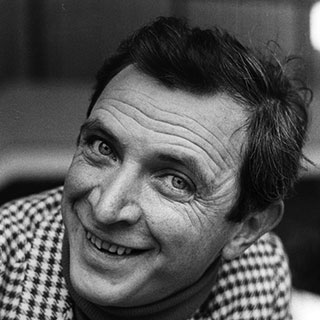 |
John Cranko was born on August 15, 1927 in Rustenburg, South Africa. He received his dance education mainly at the University of Cape Town, where he choreographed his first ballet to Stravinsky’s Suite from The Soldier’s Tale. In 1946, he continued his studies at the Sadler’s Wells School in London and shortly afterwards became a member of the Sadler’s Wells Ballet, now The Royal Ballet. From 1949 on, he devoted himself exclusively to choreography, producing extremely successful ballets, mainly for the Sadler’s Wells Ballet as well as New York City Ballet, Rambert, Paris Opera Ballet and Teatro alla La Scala in Milan.
In 1961, Cranko was appointed Artistic Director of Stuttgart Ballet. It was here that Cranko was able to truly utilize his tremendous talent. He was given the freedom to mold a new young company, gathering together a distinctive group of dancers and creating original works for them. In Stuttgart, Cranko created many small choreographic jewels such as Jeu de cartes and Opus I, as well as his symphonic ballet Initials R.B.M.E. but it was with his dramatic story ballets such as Romeo and Juliet, Onegin, The Taming of the Shrew, Carmen and Poème de l’Extase that Cranko secured his place in the pantheon of great 20th century choreographers. Cranko’s gift for nuanced storytelling, clear dramatic structure and his exquisite mastery of the art of the pas de deux as well as his dynamic, dramatic dancers, conquered New York audiences during a triumphant season at the Metropolitan Opera in 1969. International acclaim soon followed, as Cranko and his young company toured the globe.
In 1973, Cranko died unexpectedly at the age of 45. His brilliant career was cut short at its height. His legacy manifests itself not only in his ballets, which have become an integral part of the international ballet repertoire but also in the company he led to world fame, the school he founded in 1971, now named after him, Noverre: Young Choreographers, the platform for young choreographers that he helped bring to life in 1961 and the establishment of ballet as an autonomous art form equal to opera or drama in Germany. |